
A driveway can look perfectly level in October and develop a low spot, a loose border, or standing water by spring. That is why homeowners ask, can interlock survive freeze thaw conditions? Yes, it can – but the answer depends far less on the pavers themselves than on what is built underneath them.
Interlock is a strong choice for driveways, patios, walkways, and front entrances in cold climates. Unlike a single concrete slab, individual pavers can move slightly without one crack spreading across the entire surface. But that flexibility only works when the base, drainage, edge restraint, and jointing materials are installed properly. A beautiful stone surface cannot make up for a weak foundation.
Why Freeze-Thaw Cycles Cause Interlock Problems
Freeze-thaw damage begins with water. When water enters the joints, base, or surrounding soil and freezes, it expands. As temperatures rise, that water thaws and can shift into another area. Repeated cycles can gradually move the base material, soften the subgrade, and create uneven pressure beneath the stones.
Ontario winters are especially demanding because temperatures often move above and below freezing multiple times. Snowmelt, rain, ice, and poor drainage can all send water where it does not belong. If the installation does not direct water away from the house and off the paved surface, the risk of settling and heaving increases.
The pavers are rarely the first thing to fail. More often, the issue is a base that was too shallow, poorly compacted, or installed over unsuitable soil. A driveway has a greater structural demand than a backyard patio, so it needs a deeper, more carefully compacted foundation. Treating both projects the same is a shortcut that usually shows up after a few winters.
Can Interlock Survive Freeze-Thaw? Yes, With the Right Base
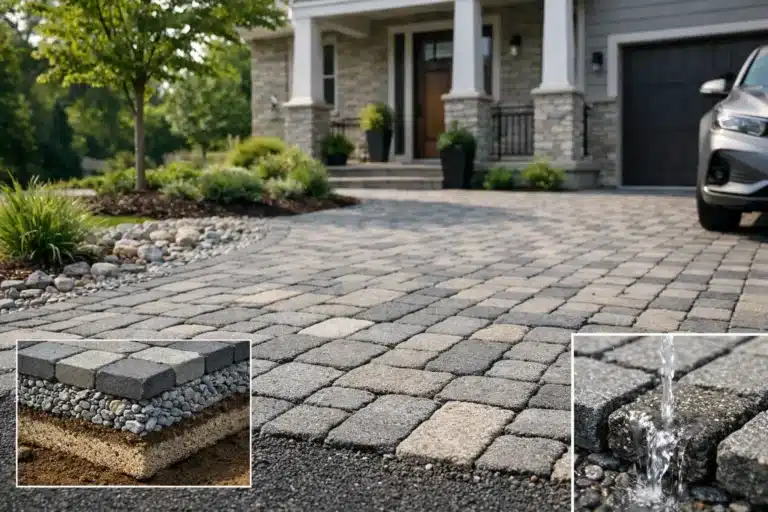
A properly installed interlock surface is built in layers. Each layer has a job: support the load, allow controlled drainage, hold the pavers in position, and prevent the surface from spreading at the edges.
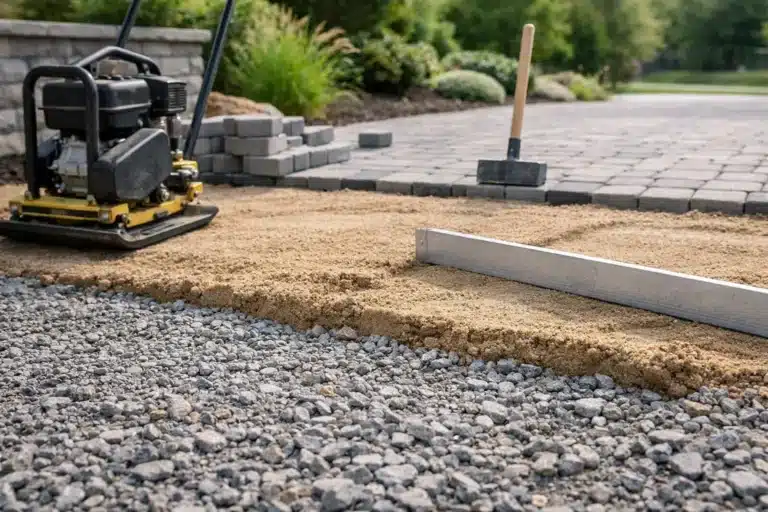
The process starts with excavation. Existing topsoil, organic material, and unstable fill need to be removed because they hold moisture and compress over time. The excavated area should account for the paver thickness, bedding layer, compacted aggregate base, and the final slope needed for drainage.
Next comes a compacted crushed-stone base. This is not simply gravel dumped into a hole. Quality installation means placing the aggregate in manageable lifts and compacting each lift thoroughly. Proper compaction creates a dense, stable layer while the angular stone still allows water to move through it instead of becoming trapped beneath the pavers.
A thin, even bedding layer is placed over the finished base before the pavers are laid. Once the stones are installed, jointing sand or a suitable joint material is worked into the gaps. Edge restraints are then secured around the perimeter to keep the field of pavers from shifting outward under traffic and seasonal movement.
These details may not be visible after installation, but they determine whether the project stays level. For homeowners comparing quotes, base preparation is one of the most important areas to discuss. A lower price may reflect less excavation, less aggregate, or less compaction – none of which are good savings if the surface needs repair a few years later.
Drainage Is What Protects the Stonework
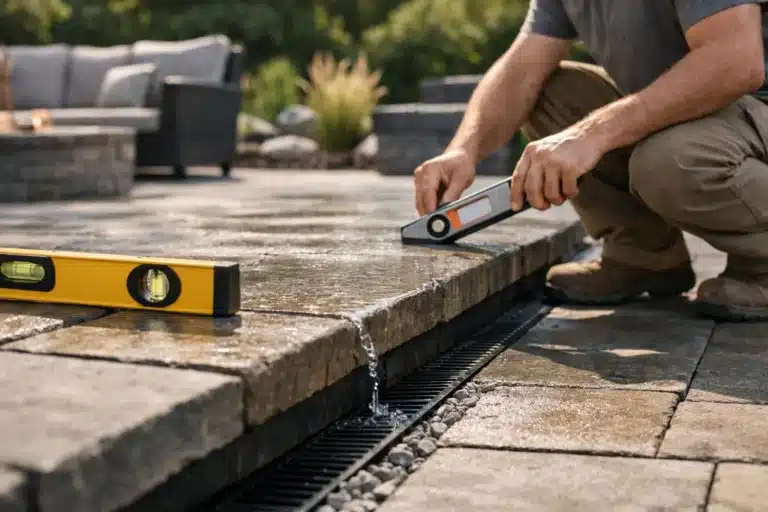
Even a deep base can struggle if water has nowhere to go. Interlock should be graded to move surface water away from the home, garage, and low-lying areas of the yard. The right slope depends on the site, but the goal is straightforward: water should not pond on the surface or run toward the foundation.
Drainage planning also needs to consider downspouts. A downspout that empties directly onto a walkway or beside a driveway can saturate the base over time. In winter, that water may freeze at the surface, creating both a slip hazard and a repeated source of moisture below the pavers.
Some properties need more than a simple slope. A yard with clay soil, a noticeable grade change, or recurring wet areas may benefit from drainage improvements, soil correction, retaining work, or a redesigned layout that directs water properly. The best hardscape plan considers the entire property, not just the outline of the patio or driveway.
Driveways Need More Structure Than Patios
A patio carries foot traffic, patio furniture, and perhaps a grill. A driveway carries the concentrated weight of vehicles, turning tires, and regular freeze-thaw exposure near the garage and street. It needs a stronger base and careful attention to transitions, edges, and drainage.
The driveway entrance is one common trouble area. Municipal curb lines, road drainage, and vehicle traffic can place extra stress on the pavers at the front of the property. The area near the garage can be another concern, particularly when meltwater flows down a sloped drive and freezes near the door.
That does not mean interlock is a poor driveway material. It means the project needs to be designed for its actual use. A professional installer should ask how many vehicles use the driveway, whether larger vehicles will park there, where water collects now, and whether there are existing drainage or settling issues. Those answers affect excavation depth, base design, and the recommended paver pattern.
Signs Your Existing Interlock Needs Attention
Small issues are easier and less expensive to repair before they become widespread. Watch for these common signs after winter:
- Pavers that rock, sink, or sit higher than the surrounding surface
- Gaps opening along borders, steps, or the driveway edge
- Water pooling in the same area after rain or snowmelt
- Joint sand washing away or weeds repeatedly growing between stones
- A noticeable slope toward the house, garage, or another structure
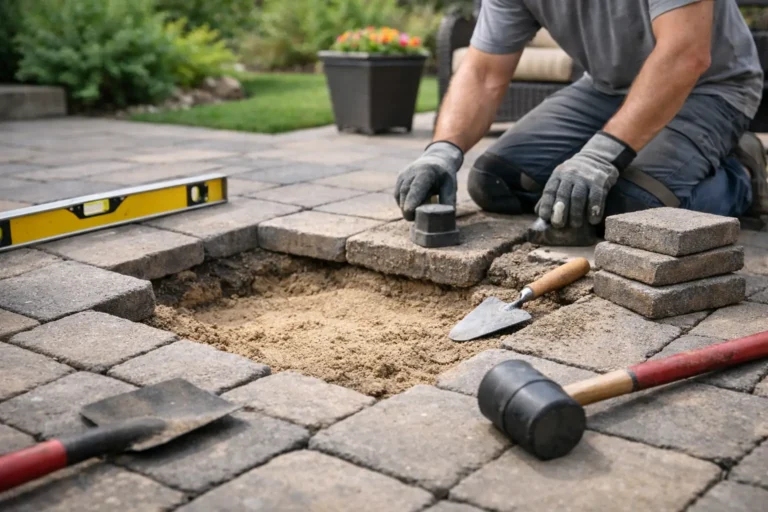
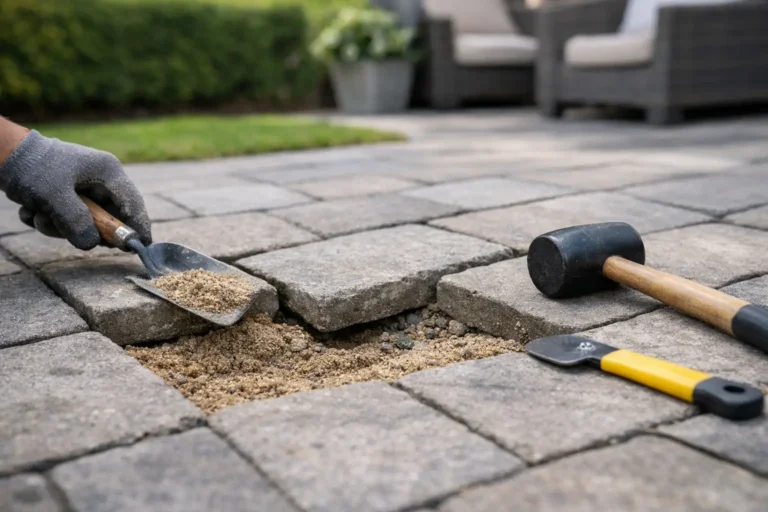
Not every uneven paver means the entire installation needs replacement. In some cases, a localized repair can solve the problem by lifting the affected stones, rebuilding the base, correcting drainage, and reinstalling the pavers. If the issue appears across much of the surface, though, a larger rebuild may be the better long-term value.
Maintenance That Helps Interlock Through Winter
Interlock is relatively straightforward to maintain, but it is not maintenance-free. Keeping joints filled helps lock the pavers together and reduces movement. If sand has washed out, it should be replaced before the gaps become large enough to allow more water and debris into the system.
Snow removal also deserves some care. Use a plastic cutting edge or raise the plow slightly when possible, especially around uneven areas and decorative borders. Metal blades can catch on raised pavers and chip edges. Avoid dumping snow in a place where meltwater will repeatedly run across the same section of stone.
De-icing products should be chosen carefully as well. Some harsh products can damage concrete pavers, surrounding plants, and nearby concrete surfaces. Sand can improve traction, while a paver-safe ice melt may be appropriate when conditions require it. The best option depends on the material, temperature, and where runoff will go once the ice melts.
A Lasting Interlock Project Starts Below Grade
Interlock can handle freeze-thaw cycles very well when it is installed as a complete system instead of a surface-only project. Premium pavers matter, but excavation, compaction, drainage, and edge restraint are what protect that investment through changing seasons.
For homeowners planning a new driveway, patio, or walkway – or dealing with stones that have shifted after winter – a site visit is the right place to start. Right On Landscaping can assess the grade, drainage, existing base, and intended use of the space before providing a clear, practical recommendation. A well-built interlock project should give you a safer, more usable outdoor space now and a surface that still looks right when spring arrives.