
A puddle that disappears after a hard rain is usually not a major concern. Water that sits in the same part of your yard for days is different. If you are asking, why does lawn water pool, the answer is usually below the grass: the slope, soil, compaction, or a blocked drainage path is keeping water from moving where it should.
In Kitchener, Waterloo, Cambridge, and across Waterloo Region, freeze-thaw cycles, spring snowmelt, clay-heavy soil, and older yard grading can all turn a small low spot into a recurring problem. Standing water can damage turf, invite mosquitoes, soften the ground around patios, and in some cases send moisture toward the house. Finding the actual cause before choosing a fix saves money and prevents a temporary repair from becoming an annual headache.
Why Does Lawn Water Pool After Rain?
Water pools when rainfall or snowmelt reaches an area faster than the ground and drainage system can move it away. That can happen for one obvious reason, such as a visible dip in the lawn, or several smaller issues working together.
The timing tells you a lot. If water clears within a few hours after a major storm, the lawn may simply be handling a heavy volume of water. If it remains for 24 to 48 hours, the soil is likely draining poorly or the yard lacks a proper outlet. Water still present several days later deserves a closer look, especially if the lawn is thinning, muddy, or soft underfoot.
Improper grading or a low area in the yard
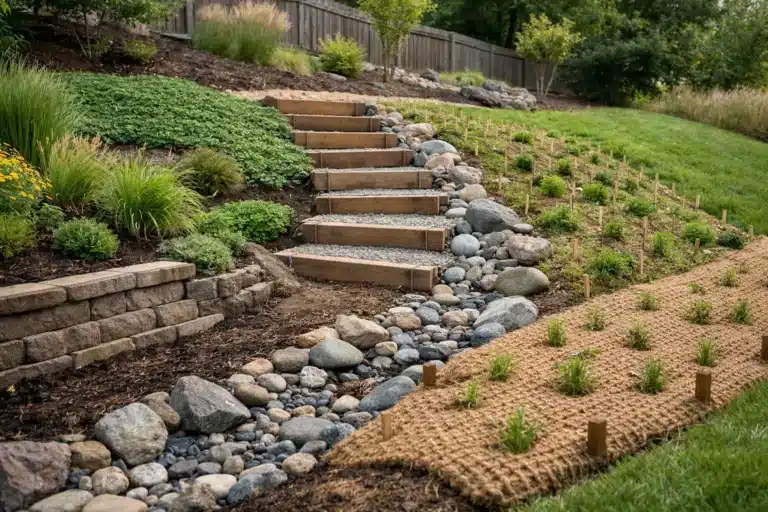
A lawn needs a consistent slope that directs water away from the home and toward a safe drainage area. Over time, soil settles around foundations, along new additions, near retaining walls, or where previous landscaping was installed without enough base preparation. Even a shallow depression can collect a surprising amount of runoff.
Poor grading is especially common after a patio, driveway, fence, pool, or garden project changes the flow of water. A new hard surface sheds water quickly. If the surrounding lawn was not adjusted to receive that runoff, the lowest section becomes the collection point.
The goal is not to make every yard perfectly flat. Flat yards often drain worse. The goal is a planned grade that moves water gently away from buildings while keeping the lawn usable and attractive.
Compacted soil prevents water from soaking in
Soil can look healthy from the surface while being dense and compacted a few inches down. Construction traffic, repeated foot traffic, heavy equipment, and years of lawn use can squeeze out the air spaces that normally allow water to infiltrate.
Compaction is common near side yards, gates, play areas, and spots where contractors or homeowners regularly move equipment. You may notice water pooling even though the area does not look particularly low. A screwdriver or soil probe that is difficult to push into moist ground can be a useful early sign of compaction.
Core aeration may help a lawn with mild surface compaction. It will not correct a significant grade issue, buried construction debris, or a heavy clay layer. In those cases, improving the soil profile or rebuilding the affected section of lawn may be the more durable solution.
Clay soil and poor soil structure
Much of Waterloo Region has soil with a meaningful clay content. Clay holds water well, but it drains slowly, particularly when it is compacted or saturated after a long stretch of rain. During spring thaw, the ground may still be frozen or overly wet below the surface, leaving snowmelt nowhere to go.
Adding a thin layer of topsoil to a wet spot is rarely enough. Low-quality fill can make the problem worse by creating a denser layer or allowing the area to settle again. Proper soil work may involve removing unsuitable material, bringing the area to grade with appropriate screened soil, and preparing a stable base for sod or seed.
Downspouts, sump discharge, and neighboring runoff
Sometimes the lawn is not the original source of the water. Downspouts that discharge too close to the house can flood the lawn and undermine the intended grade. A sump pump outlet may also concentrate water in one location. If the area pools after dry-weather sump discharge, rather than only during rain, that is an important clue.
Water can also enter from a neighboring property, a shared swale, or a higher driveway. The practical solution depends on where the water begins and where it can legally and safely be directed. Redirecting water onto a neighbor’s property is not a fix. A careful site assessment should look at the entire drainage path, not just the puddle.
Blocked or damaged drainage features
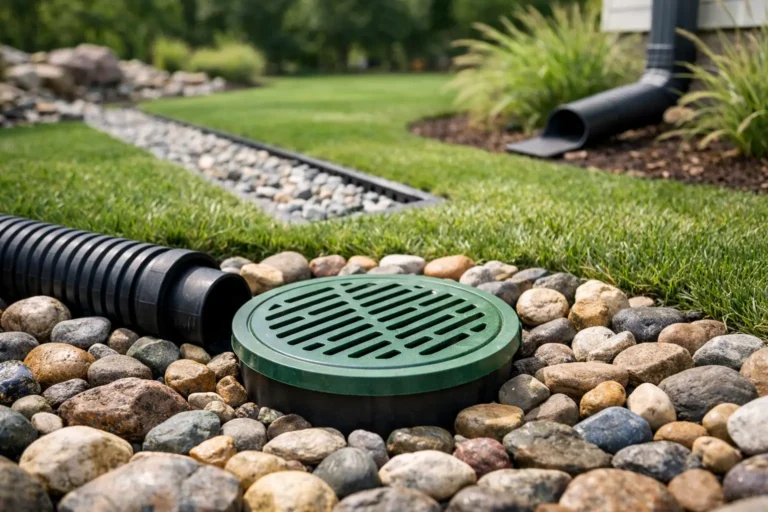
Homes with catch basins, channel drains, French drains, or swales can still develop pooling when those features are blocked, crushed, or improperly installed. Leaves, mulch, soil, and ice can clog a surface inlet. Underground pipe can settle, separate, or become damaged by roots and equipment.
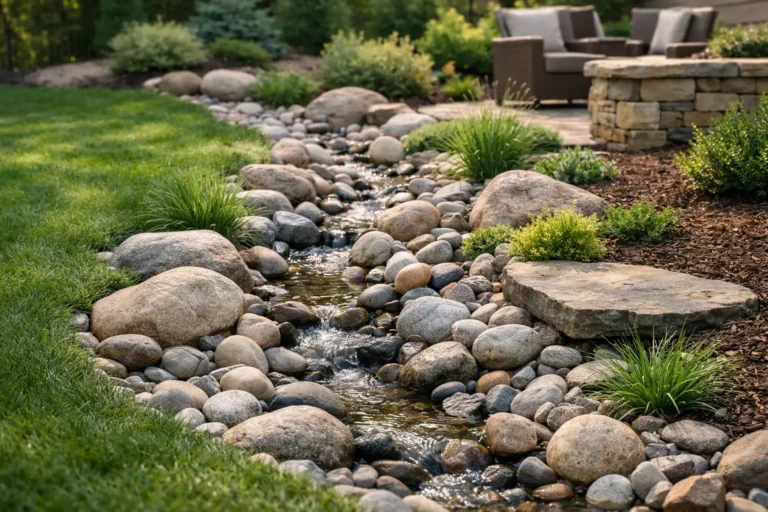
A swale is the shallow, shaped channel that guides runoff across a yard. It may not look dramatic, but it needs to remain open and correctly sloped. Filling it in to gain a little more lawn area can create drainage trouble for your property and nearby homes.
How to Identify the Cause Before Fixing It
Start by observing the yard during a moderate rain, if it is safe to do so. Watch where water enters the problem area and whether it arrives from a downspout, driveway, roofline, or uphill lawn. After the rain stops, check whether the puddle is shrinking from the edges or simply sitting in place.
Take photos at a few stages: during rainfall, a few hours later, and the next day. These images are useful when discussing the issue with a landscaping contractor because they show the water pattern that may not be visible when the site is dry.
Look for related warning signs. Yellowing grass, moss, bare spots, standing water near the foundation, eroded mulch, and muddy tracks are all signs that the issue may extend beyond one patch of lawn. Also pay attention to water at the base of retaining walls or interlock patios. Those structures need stable drainage conditions to perform well through Ontario winters.
Avoid judging grade by eye alone. Lawns can appear level while still directing water toward the wrong place. Professional grading work uses measured elevations and considers the foundation, lot lines, hardscapes, drainage outlets, and finished lawn height together.
Fixes for Pooling Water in a Lawn
The right repair depends on the source of the water and the amount that needs to move. A small, isolated depression may be corrected with topdressing and sod repair. A persistent low area affecting a large portion of the yard may need regrading, soil replacement, and a revised drainage plan.
Regrade the lawn for positive drainage
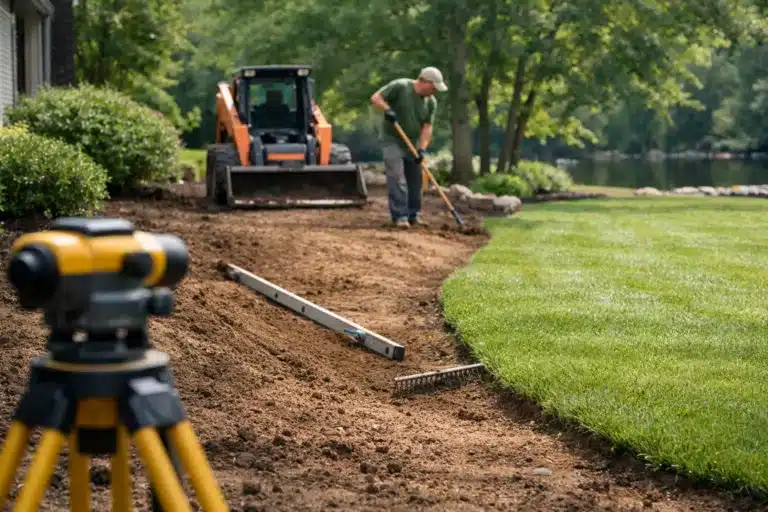
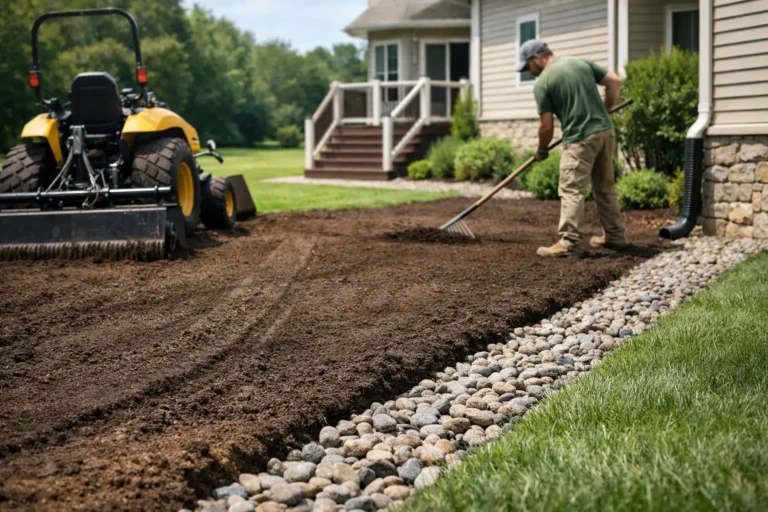
Regrading reshapes the surface so water flows away from the home and through an appropriate route. This is often the best long-term answer when the entire yard slopes incorrectly or when a low spot has developed close to the foundation.
Good grading is precise work. Too little slope leaves water behind; too much can cause erosion, make mowing difficult, and leave a yard feeling uneven. The finished grade also needs to account for patios, walkways, gardens, and property boundaries. Once the base is prepared, fresh sod gives the repaired area a clean, established finish.
Improve soil and repair the turf
Where drainage is slowed mostly by compaction or poor soil, aeration and organic soil improvement can help. Severe cases may require removal of compacted material and replacement with properly prepared topsoil before new sod is installed.
This approach works best when water has a place to go after it enters the soil. If the yard remains the lowest point on the property, better soil alone will not solve the pooling problem.
Add a drainage system when surface grading is not enough
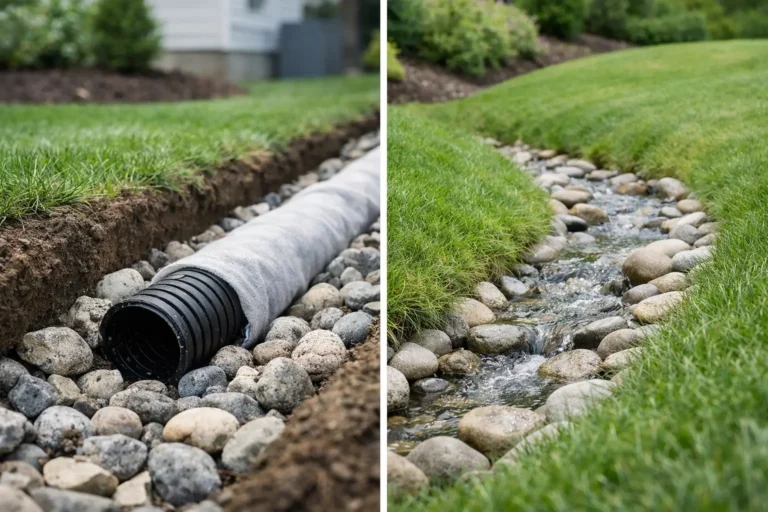
A French drain, catch basin, or other drainage feature can collect water below or at the surface and guide it toward a suitable outlet. These systems are useful around patios, side yards, retaining walls, and areas where the property layout limits how much the lawn can be reshaped.
Drainage systems are not automatically the first choice. They add excavation, material, and maintenance considerations, and they must be installed with the correct slope and discharge point. In many yards, thoughtful grading is simpler and more cost-effective. In others, a combination of grading and drainage is the only reliable way to control runoff.
Redirect concentrated roof water
Extending downspouts or changing their outlet can make an immediate difference when roof runoff is overwhelming a section of lawn. The discharge point should be directed away from the foundation and should not create a new muddy area or send water across a walkway where it can freeze.
For homes with sump pump discharge, plan for seasonal conditions. A route that seems fine in summer may create ice or saturated ground during late winter and early spring.
When Pooling Water Needs Professional Attention
Call for an on-site assessment if water is collecting near your foundation, affecting a patio or retaining wall, repeatedly killing grass, or remaining after two dry days. You should also get help before adding soil around a home. Raising the wrong area can reduce clearance around siding, interfere with drainage details, or move water toward a neighbor.
A reliable contractor should explain what is causing the problem, what the repair involves, and where the water will go afterward. At Right On Landscaping, that starts with an on-site look at the grade, soil, and existing hardscape so the recommended work fits the property rather than applying a one-size-fits-all fix.
A dry, firm lawn is not just easier to enjoy. It protects the work you have already invested in outside your home. Address the water path early, and your yard will be better prepared for the next heavy rain, spring thaw, and season of everyday use.