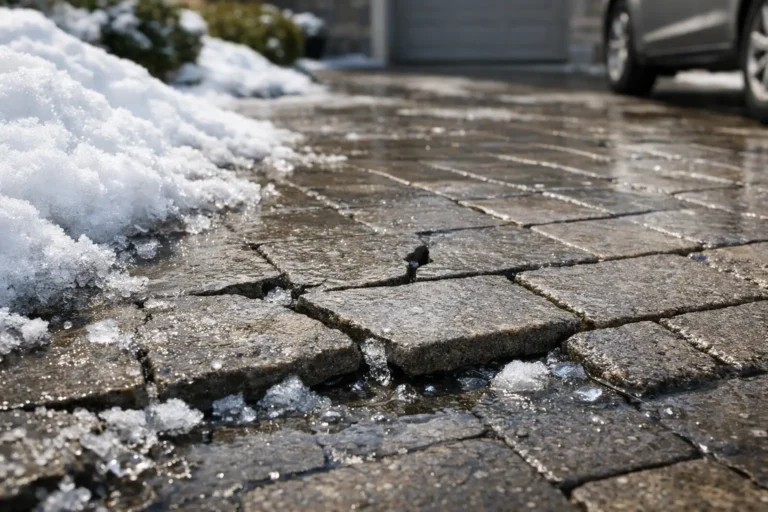

A patio that looks great in July can become a costly headache after a few Ontario winters if the material and base are not suited to the property. The best patio materials are not simply the ones with the nicest color or lowest initial price. They need to fit your yard’s drainage, how you use the space, your budget, and the freeze-thaw conditions common across Waterloo Region.
For homeowners in Kitchener, Waterloo, Cambridge, and nearby communities, interlock pavers, natural stone, concrete, porcelain pavers, and gravel are all worth considering. Each can create a functional outdoor living area when installed properly. The right choice comes down to the balance of appearance, maintenance, long-term durability, and site preparation.
What Matters Before Choosing a Patio Material
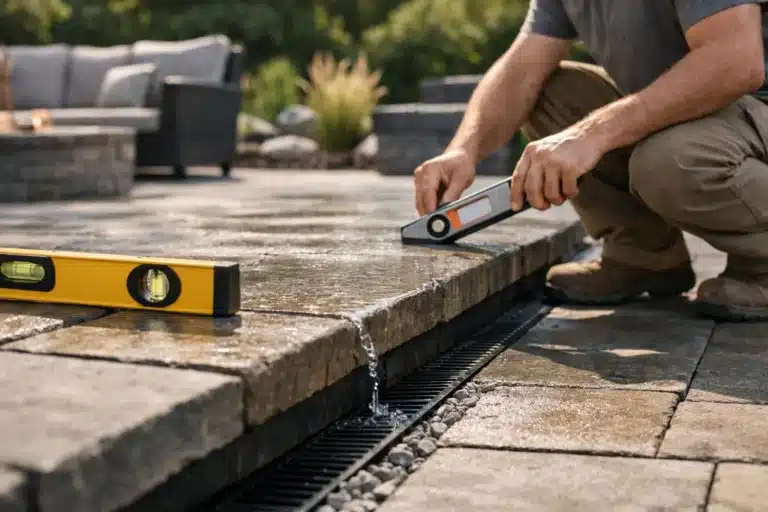
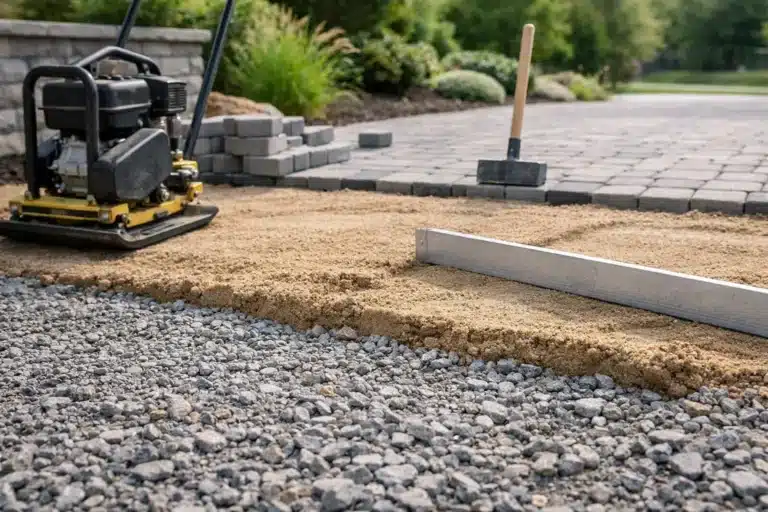
The patio surface gets most of the attention, but the work underneath determines whether it stays level. A proper installation begins with excavation, a compacted granular base, correct edge restraint where required, and a finished slope that directs water away from the home.
That last point matters. Standing water can damage a patio, soften the surrounding ground, and contribute to drainage problems near the foundation. A good patio design also considers door thresholds, existing grades, downspout locations, garden beds, and how people will move through the yard.
Material choice should follow those practical details. A formal front walkway has different needs than a large backyard patio for family dinners, a pool surround, or a low-maintenance seating area beside a garden.
Best Patio Materials for Durability and Style
Interlock pavers: the practical all-around choice
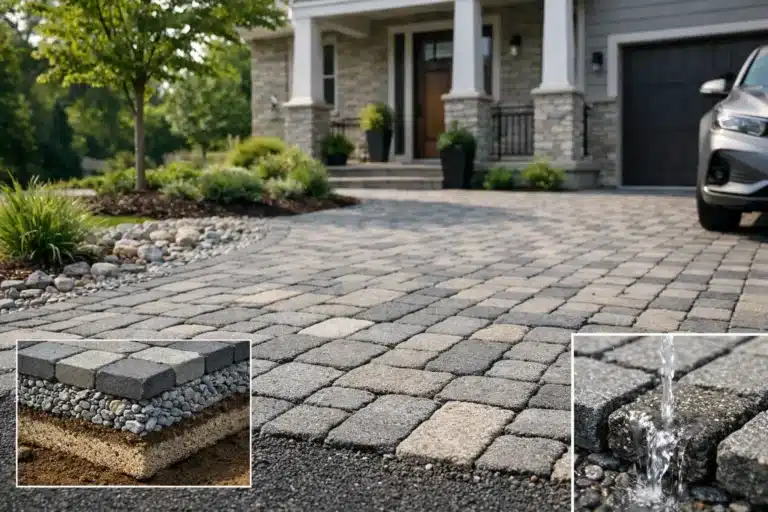
Interlock pavers are one of the most popular patio materials in Ontario for good reason. They come in a wide range of shapes, colors, textures, and laying patterns, so they can work with traditional brick homes, modern exteriors, and everything in between. They can also be used to tie a patio into walkways, steps, garden borders, or an interlock driveway.
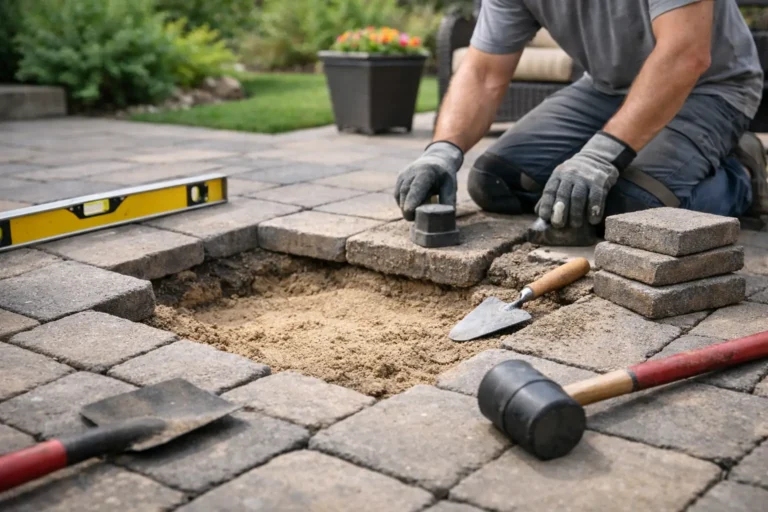
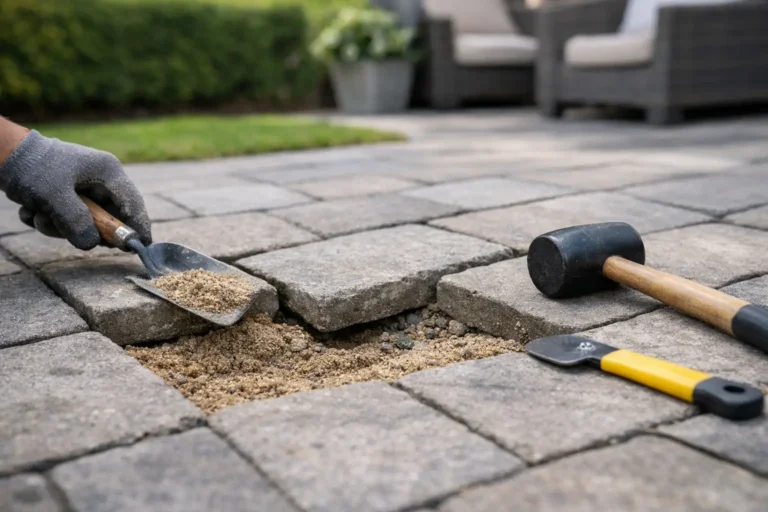
Their biggest advantage is repairability. If a section settles because of ground movement, drainage issues, or an underground repair, the affected pavers can often be lifted, the base corrected, and the same stones reinstalled. That is a major benefit over a cracked concrete slab.
Interlock does require a well-built base and strong edge restraints. Cutting corners on excavation or compaction can lead to shifting, low spots, and separated joints. Jointing sand may also need periodic maintenance, particularly in areas with heavy rain, shade, or persistent weed growth. For most homeowners who want a durable, customizable patio with a strong balance of cost and appearance, interlock is hard to beat.
Natural stone: premium character that lasts
Natural stone creates a patio with a look that manufactured products cannot fully duplicate. Flagstone, limestone, and other natural stone options offer variation in color, texture, and shape, giving each installation its own character. It is an especially strong choice for homes with mature landscaping, stone veneers, or a more traditional outdoor design.
Stone can be laid in irregular pieces for a relaxed garden setting or cut into more uniform shapes for a cleaner, more structured finish. When the material is selected carefully and installed on a solid base, it holds up well through changing seasons.
The trade-off is cost. Natural stone is typically more expensive than standard interlock due to material pricing, cutting, fitting, and labor. Some stone surfaces can also be uneven, which may not be ideal for patio furniture, strollers, or anyone who needs a smoother walking surface. A contractor should help you choose stone with an appropriate texture and thickness for the location, especially around steps and entrances.
Concrete: clean lines and a lower upfront cost
Poured concrete remains a practical patio option for homeowners who prefer a simple, modern surface or need to control their initial budget. It can be broom-finished for traction, stamped to resemble stone, or finished in a range of colors and patterns. A straightforward concrete pad also provides a stable surface for furniture, grills, and outdoor kitchens.
Concrete’s limitation is that it is a continuous slab. Ontario’s freeze-thaw cycles, shifting soils, and water movement can cause cracking over time, even when the installation is done correctly. Control joints help manage where cracks occur, but they do not eliminate the risk.
A small hairline crack may be mostly cosmetic. Larger cracks, heaving, or sinking can be harder to repair without noticeable patching or replacement. Concrete is a sensible choice when clean lines and cost efficiency are priorities, but homeowners should go in with realistic expectations about long-term cracking and repair options.
Porcelain pavers: sleek, low-porosity, and modern
Porcelain pavers have become more common in contemporary backyard designs. They offer crisp edges, consistent sizing, and a broad range of finishes that can resemble stone, concrete, or wood. Because porcelain is dense and low-porosity, it resists staining and absorbs very little water.
That makes it appealing for patios used for dining and entertaining. Spilled food, mud, and everyday messes are generally easier to clean than they are from rough natural stone. Many porcelain products also offer slip-resistant textured finishes suitable for exterior use.
Porcelain is not a do-it-yourself shortcut. It needs proper handling, cutting equipment, and a carefully prepared base. The pavers are often thinner than concrete pavers, and installation details matter greatly around edges, steps, and transitions. It is usually a higher-cost option, but it can be an excellent fit for homeowners who want a refined, low-maintenance surface with a modern look.
Gravel: flexible and budget-friendly for casual spaces
Gravel patios can work well in the right setting. They are generally more affordable than stone, pavers, or concrete, and they suit informal seating areas, fire pit zones, side yards, and cottage-style gardens. Gravel is permeable, which can help water move through the surface rather than pooling on top.
However, gravel is not ideal for every backyard. Loose stones can migrate into grass and garden beds, furniture legs can sink, and snow removal is more difficult than it is on a solid surface. It can also be inconvenient for wheeled equipment, young children, and anyone who wants a perfectly level dining area.
A quality gravel patio still needs excavation, base preparation, edging, and a suitable aggregate size. Simply spreading loose stone over soil rarely produces a clean or lasting result. Gravel is best viewed as a purposeful design choice for a relaxed, permeable outdoor area, not a substitute for proper construction.
Match the Material to How You Use the Space
A large family patio usually benefits from a smooth, level surface that handles tables, chairs, and frequent foot traffic. Interlock, porcelain, and finished concrete are often the strongest candidates. For a smaller garden retreat where texture and natural appearance are the priority, flagstone or gravel may suit the space better.
If the patio connects to an existing interlock walkway or driveway, matching or complementing the paver style can make the whole property feel more finished. If you are building around a pool, traction, drainage, and heat retention deserve extra attention. Dark materials can get hot in direct sun, while highly textured materials may be less comfortable for bare feet.
Budget should include more than the visible surface. Site access, demolition of an old patio, excavation depth, grading corrections, steps, retaining walls, drainage work, and material cuts all affect the final price. An honest estimate should explain what is included in the base preparation and why it is needed.
Do Not Underestimate the Base and Drainage
A beautiful patio can fail early if water is trapped below it or the granular base is too shallow for the conditions. This is especially true in yards with heavy clay soil, low areas, slopes, or drainage concerns near the house.
The goal is not just to lay a level patio. It is to create a surface that is level where it needs to be for comfort, while still being properly pitched for drainage. In some yards, that may involve regrading, incorporating a retaining wall, or directing downspout water away from the patio area before stonework begins.
At Right On Landscaping, the focus is on building patios that look finished on day one and remain dependable through the seasons. Premium materials matter, but so do excavation, compaction, drainage, and clean detail work at every edge.
A Patio Should Fit Your Yard for the Long Term
The best choice is rarely the most expensive material or the trendiest one. It is the material that fits your home, how you spend time outside, and the conditions already present in your yard. A well-planned interlock patio may deliver better long-term value than a more expensive surface installed on a weak base. Likewise, natural stone or porcelain may be worth the investment when design character and low-maintenance performance are central to the project.
Before making a final decision, walk through the space with a contractor who understands local grading, winter conditions, and residential hardscaping. A clear plan for the material, base, drainage, and transitions will give you a patio that feels like a natural extension of your home, not another project waiting to be repaired.