
A patio or walkway rarely sinks all at once. It usually starts with a small low spot that holds rainwater, a paver that rocks underfoot, or a driveway edge that no longer sits level with the lawn. Understanding why pavers sink helps you deal with the real cause before a minor repair turns into a larger drainage or safety problem.
In Waterloo Region, paver movement is often tied to water, soil conditions, and repeated freeze-thaw cycles. Interlock stone is built to flex slightly, but it still depends on a stable, properly compacted foundation. When the ground below that foundation shifts or washes away, the pavers above it follow.
Why Pavers Sink: The Base Is Usually the Problem
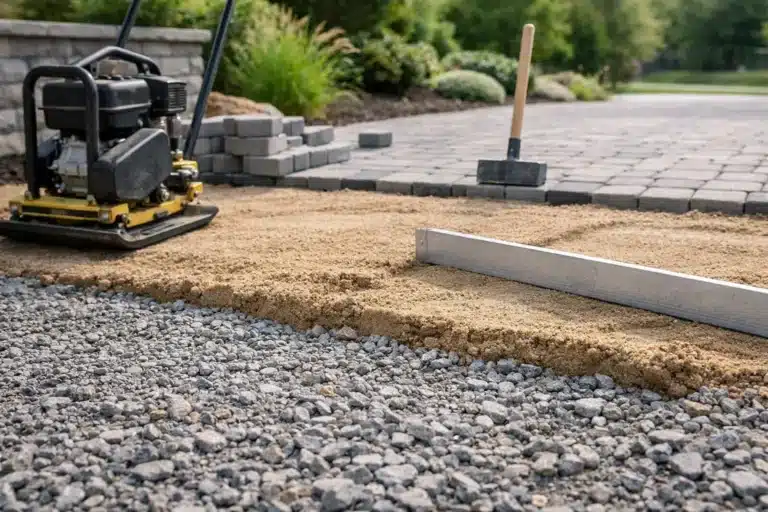
Pavers are only as strong as the layers beneath them. A proper installation is not simply stone placed on dirt. It needs excavation to the right depth, a compacted granular base, a thin and even bedding layer, edge restraints, and grading that moves water away from the house and paved surface.
When any of those details are missed, settlement becomes more likely. The visible dip is at the surface, but the failure often begins much deeper.
Poor excavation or an undersized granular base
A patio used for foot traffic does not need the same base depth as a driveway carrying vehicles, but both need a base designed for the site. If the contractor removes too little soil, installs too little granular material, or skips proper compaction, the ground will compress under load over time.
This is especially common in driveways, near garage doors, and along heavily used walkways. A base may look level when the work is new, then settle after a season of vehicle weight, rainfall, and winter weather. Adding more sand on top might improve the appearance temporarily, but it does not rebuild the support layer that has failed.
Water is washing out support beneath the pavers
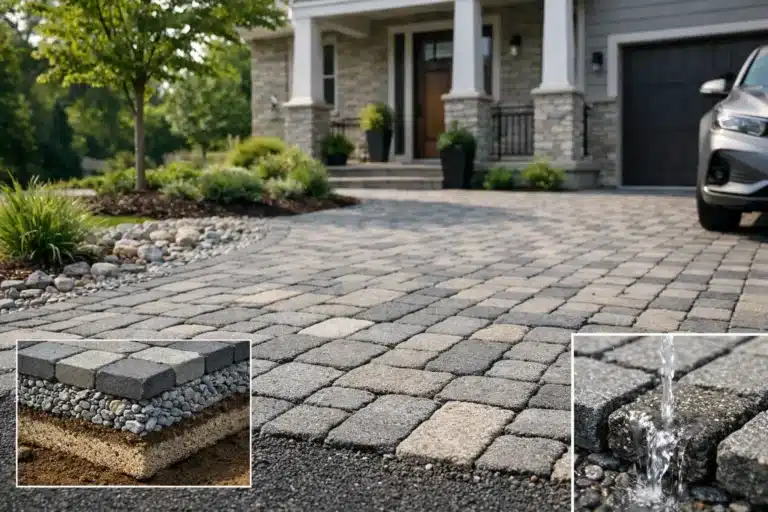
Water is one of the main reasons otherwise good-looking pavers start to drop. Rain runoff can enter joints, travel beneath the surface, and carry away fine material from the bedding or base. Downspouts that discharge beside a walkway, overflowing eavestroughs, and negative grading can all direct too much water into one area.
Water may also enter from below. High groundwater, a low-lying yard, or drainage from a neighboring property can keep the subgrade wet and unstable. If the soil remains saturated, it loses bearing strength. The granular base can shift, and pavers begin to settle unevenly.
The location of the low spot provides useful clues. Settlement near a downspout or at the bottom of a sloped patio is often a drainage issue. A driveway depression near the street may point to runoff, poor compaction, or a weakened edge.
Freeze-thaw cycles lift and drop the ground
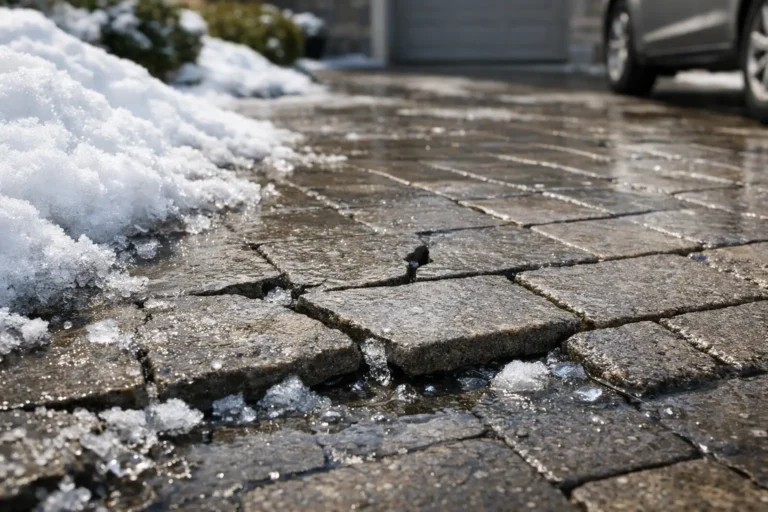
Ontario winters put hardscaping through repeated freeze-thaw stress. Water in the soil expands as it freezes, which can lift pavers and the base beneath them. When the ground thaws, it does not always return to the same position. Fine soil can move, water can drain into newly opened spaces, and a section of pavers may settle lower than it was before winter.
Freeze-thaw damage is worse where drainage is poor. Water needs a place to go before it freezes. A properly graded patio and correctly built base reduce the amount of trapped water below the surface, helping the installation handle seasonal movement.
Weak or shifting native soil
Not every yard starts with ideal soil. Some properties have clay-heavy soil that holds moisture and expands or contracts as conditions change. Others include fill soil from earlier construction, buried organic material, or areas disturbed during utility work. These conditions can settle long after a home is built.
A reliable installation accounts for the soil that is there. Depending on the site, that can mean deeper excavation, added granular base, geotextile fabric to separate soil from aggregate, or drainage improvements before new pavers are installed. There is no single depth or method that fits every yard.
Missing edge restraints let the pavers spread
Pavers work together as an interlocking surface. Strong edge restraints hold the pattern in place and prevent outward movement. Without them, pavers at the perimeter can creep apart, joints widen, and the surface loses its locked-in structure.
This does not always cause a dramatic sinkhole, but it can lead to uneven areas over time. Edges beside lawns, gardens, and driveway borders are particularly vulnerable when the restraint is missing, damaged, or installed on unstable material.
Joint sand has washed out or was never properly installed
Joint sand helps transfer loads between pavers and keeps them from shifting independently. When joints are empty or heavily eroded, individual stones can rock, tilt, and allow more water into the bedding layer below.
Replacing joint sand can be a useful maintenance step when the base is sound. But if several pavers have dropped or the area feels soft underfoot, the issue is likely deeper than the joints. A surface-only repair will not stop ongoing settlement.
How to Tell Whether the Problem Is Minor or Structural
A single loose paver is not always a major concern. It may have shifted slightly after a winter, or joint material may simply need to be renewed. However, patterns of movement deserve a closer look.
Watch for standing water after rain, a growing low spot, pavers that rock when stepped on, gaps opening along edges, or cracks where the paved area meets a step, retaining wall, garage, or foundation. These signs suggest the surface is no longer being supported evenly.
Driveway settlement should be addressed sooner rather than later. Vehicle weight can accelerate damage, and a low area near the garage can send water toward the building. On patios and walkways, uneven pavers can become a trip hazard, especially when wet or covered by snow.
What a Lasting Paver Repair Looks Like
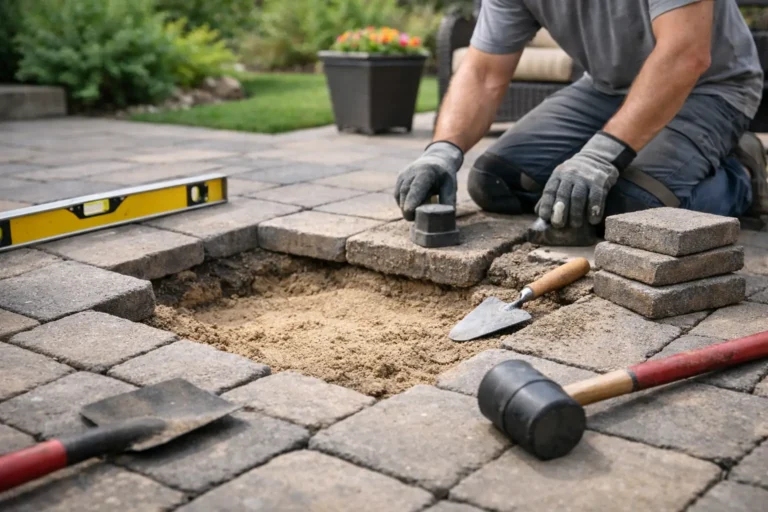
A durable repair starts by lifting the affected pavers carefully so they can be reused when they are still in good condition. The bedding layer and granular base beneath them are then inspected. If the base has settled, softened, or washed out, it needs to be removed or rebuilt to the correct level.
The repair area should be compacted in layers, not just leveled once at the top. Proper compaction is what gives the base long-term strength. The installer then restores the bedding layer, resets the pavers to match surrounding elevations, installs or repairs edge restraints as needed, and sweeps joint sand into the finished surface.
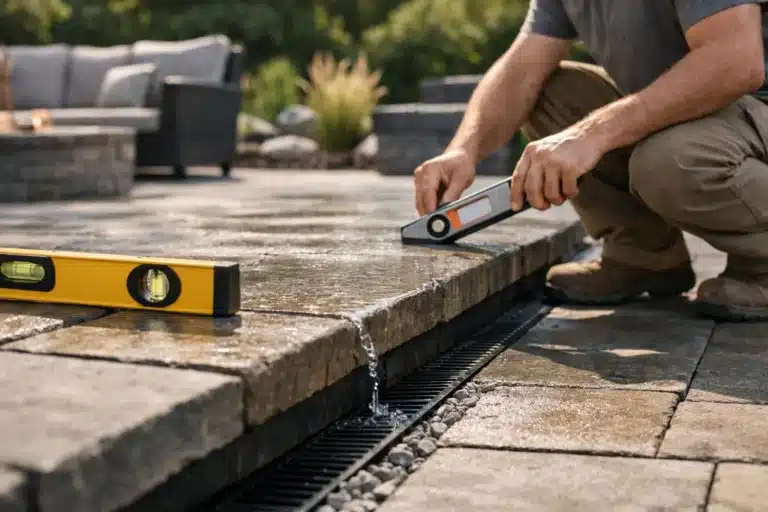
Drainage should be corrected at the same time if it caused the settlement. That may involve adjusting the slope, redirecting a downspout, extending drainage away from the patio, or addressing runoff from an adjacent lawn bed. Reinstalling pavers without solving the water problem is a short-term fix.
There is a trade-off here. A small lift-and-relevel repair costs less upfront when the issue is limited to a stable, isolated area. But if the base is failing across a larger section, patching only the visible dip can leave you paying for repeated repairs. A clear site assessment helps determine whether targeted work or broader reconstruction offers better value.
Preventing Pavers From Sinking in the First Place
The best prevention happens before the first paver is installed. Good planning starts with the finished height, the slope away from the home, and the intended use of the surface. A pedestrian patio, front walkway, and vehicle driveway should not be built with the same base expectations.
Keep water in mind after installation as well. Make sure downspouts do not empty directly onto pavers or beside the base. Maintain eavestroughs, watch for water pooling near paved areas, and refill depleted joint sand before gaps become large enough to invite movement. Avoid placing extremely heavy items in one spot on a patio unless the base was built to support them.
For new work, premium pavers matter, but the preparation below them matters more. The strongest stone can still settle on a weak foundation. A well-built base, correct grading, dependable edge restraints, and careful compaction are what make an interlock surface feel solid year after year.
If your patio, walkway, or driveway is already showing signs of settlement, it is worth having the cause assessed before another winter arrives. Right On Landscaping can inspect the surface, identify the drainage or base issue behind it, and provide a straightforward repair plan built for the conditions in your yard. A level, well-drained paver surface is safer to use, easier to maintain, and far more likely to stay that way.