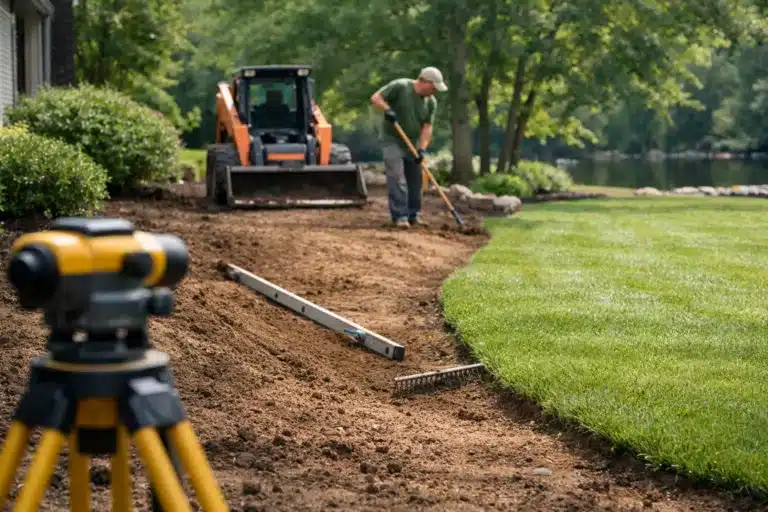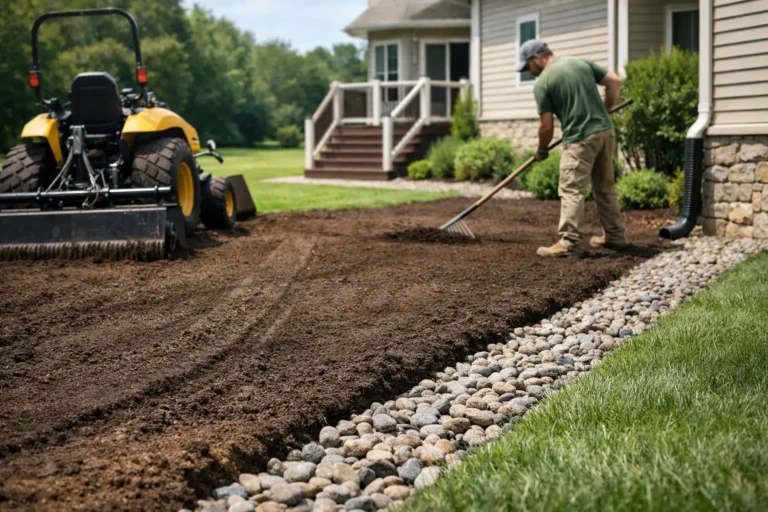

A hard rain should not leave a muddy trench beside your foundation, wash mulch across the lawn, or turn a side yard into a place no one can use. River rock drainage landscaping gives runoff a planned path while creating a finished, natural-looking feature that suits many Waterloo Region properties. Done properly, it is more than spreading decorative stone over a wet area. It starts with grading, a dependable outlet for water, and preparation that holds up through freeze-thaw cycles.
Why River Rock Works for Drainage
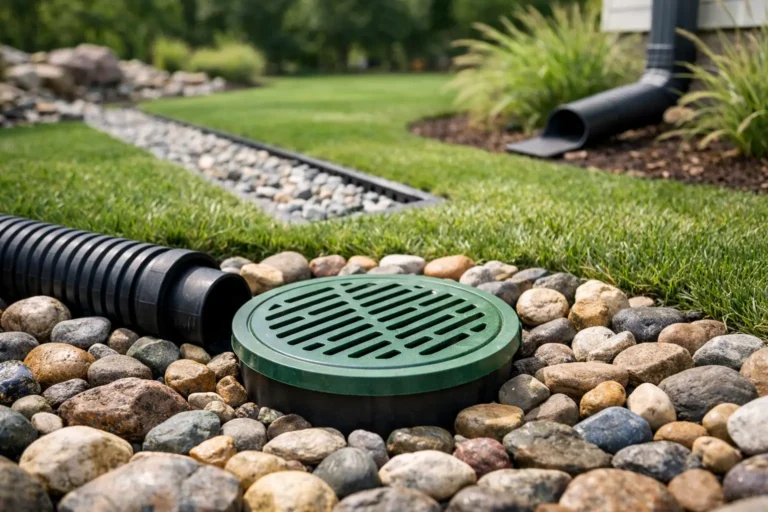
River rock is a practical material for directing visible surface water. Its rounded shape softens the look of a drainage channel, dry creek bed, swale, or downspout run, while the open spaces between stones let water move through rather than sit on top. It can protect soil from splash erosion, keep mulch out of low spots, and give an otherwise difficult part of the yard a clean, intentional appearance.
For homeowners dealing with runoff from a roof, driveway, patio, or sloped lawn, this approach can solve two problems at once. The stone provides erosion control, and the finished channel can tie into garden beds, retaining walls, interlock walkways, or a backyard renovation without looking like an afterthought.
Still, river rock is not a cure for every water issue. If water is entering a basement, pooling against the house, or coming from a failed weeping tile system, the source needs proper investigation. A decorative stone bed cannot replace a foundation drainage repair. The same is true for severe lot-wide drainage problems that may require regrading, catch basins, buried pipe, or an approved discharge plan.
River Rock Drainage Landscaping Starts With Grade
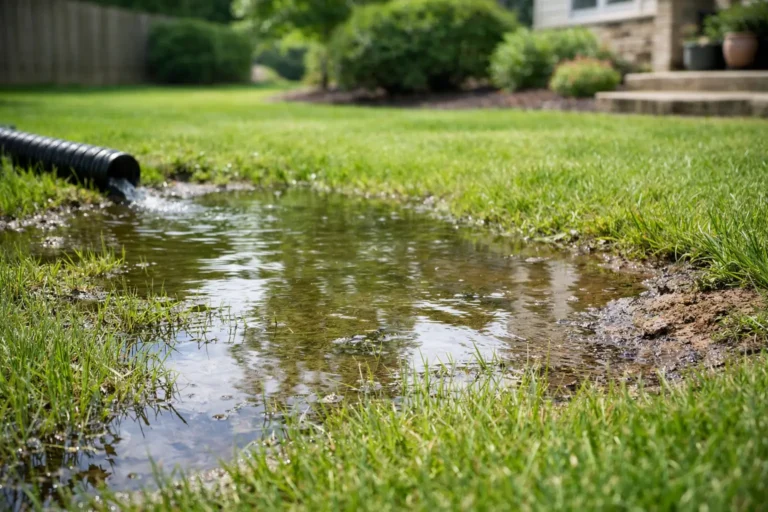
The most important part of any drainage project is the slope beneath the finished surface. Water follows gravity, so the ground needs to guide it safely away from the home and toward a suitable area of the property. A river rock channel installed on flat ground may look good on day one, but it can become a shallow pond after the next storm.
A contractor should assess where the water starts, where it travels, and where it can safely end. That means looking beyond the wet spot itself. Downspouts, neighboring grades, hard surfaces, lawn slopes, garden beds, and retaining walls all affect the path water takes. On many residential properties, a gradual swale or dry creek bed carries runoff toward a lower landscaped area. In other cases, a buried pipe is needed under the stone to move water farther from the house.
The outlet matters just as much as the channel. Water should not be redirected onto a neighbor’s property, across a sidewalk, or toward an area that will create a new muddy problem. Every yard is different, and local site conditions determine whether the best answer is a visible rock feature, a French drain, regrading, or a combination of these solutions.
Keep Water Away From the Foundation
A finished grade should direct water away from the home. This sounds simple, but patios, garden borders, walkways, and settled soil often interrupt the original slope over time. When water collects near a foundation, the right repair may involve rebuilding the grade before installing any stone.
River rock can be an attractive surface around a downspout extension or along a side-yard drainage route. It should not create a trough that holds water against the house. Proper layout makes the drainage feature work with the grade, not against it.
Build the Base Before Placing Stone
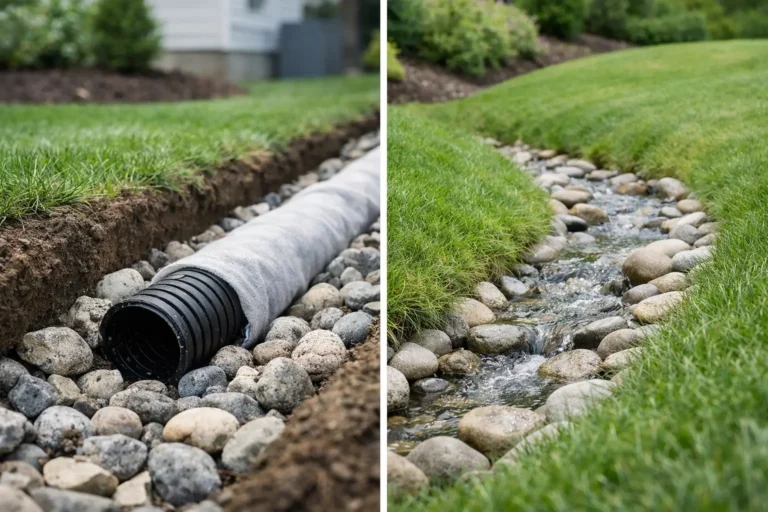
Clean installation separates a durable drainage feature from one that quickly sinks, spreads, and fills with weeds. The area is excavated to the required depth, shaped to the planned slope, and cleared of loose organic material. The depth depends on the stone size, soil conditions, and whether the channel includes drainage pipe or needs to handle heavier runoff.
A quality landscape fabric is often installed between the soil and stone. It helps keep the rock from migrating down into the soil while reducing weed growth from below. Fabric is helpful, but it is not a permanent weed barrier. Wind-blown seeds and organic debris can still settle between stones, so a river rock area will need occasional maintenance.
In softer or wetter ground, a compacted aggregate base may be necessary to stabilize the installation. For a dry creek bed, larger stones are commonly placed first along the edges and in areas that receive faster-moving water. Smaller river rock fills the center and creates a more natural flow pattern. The exact mix should suit the scale of the yard. Tiny stone can wash away in a strong storm, while oversized boulders can overwhelm a narrow side yard.
Choose Stone for Function, Not Just Color
River rock comes in a wide range of sizes and colors. A warm blend may complement brick, while gray stone can suit modern interlock and darker exterior finishes. Appearance matters, especially at the front of the home, but drainage performance should lead the decision.
Smaller river rock works well for light runoff around planting beds and downspout areas. Medium stone is a common choice for most decorative swales. Larger cobbles and accent boulders add weight and stability where water gains speed on a slope. A well-built feature often uses more than one size so the finished channel looks natural and stays in place.
Avoid assuming all rounded stone behaves the same way. Smooth river rock can shift more easily than angular crushed stone, particularly on steeper slopes. In some situations, crushed aggregate is the better material below the surface, while river rock provides the visible top layer. This is one reason an on-site review is worth more than choosing stone solely from a photo.
Plan for Ontario Winters
Winter changes the demands on outdoor drainage. Frozen soil, spring snowmelt, and repeated thawing can move stone, expose fabric, and reveal low spots that were not obvious during dry weather. A drainage feature needs enough depth and stable edging to keep rock contained through these seasonal changes.
It should also be located where snow clearing will not push debris into the channel or force stones onto a driveway or walkway. If the feature sits near a high-traffic area, a defined edge using larger stone, metal edging, or interlock can help keep the surface neat and safe.
Make the Feature Look Like It Belongs
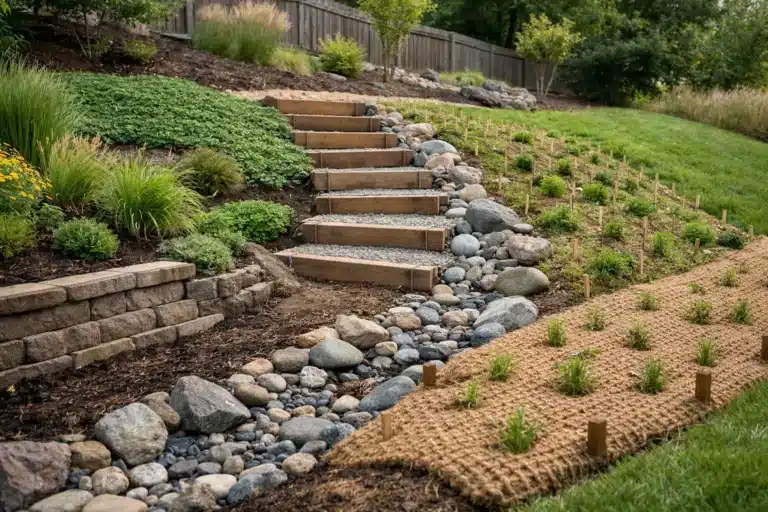
The best river rock drainage landscaping does not look like a last-minute repair. It fits the yard’s existing lines and materials. A channel can curve through a garden bed, widen at a low point, and narrow again as it leads water away. Plants placed along the edges soften the stone and help stabilize surrounding soil.
Choose plantings that tolerate the conditions they will actually face. The edges of a drainage swale may stay drier than expected, while the bottom can receive periodic saturation. Perennials, ornamental grasses, shrubs, and groundcovers should be selected for sun exposure, mature size, and moisture levels. Placing thirsty plants directly where fast runoff travels can create extra maintenance and poor results.
A drainage feature can also connect naturally to other improvements. River rock beside a patio can manage roof runoff without detracting from the entertaining area. Along a retaining wall, it can protect the base from erosion and keep a planting bed tidy. At the front of a home, it can improve curb appeal while solving an ongoing puddling issue near a walkway.
Know When a Professional Installation Makes Sense
A small decorative rock strip may be manageable for an experienced homeowner. More involved drainage work deserves careful planning, especially when it is close to a foundation, crosses under hardscaping, includes buried pipe, or manages runoff from a large roof area. Incorrect grading can move the problem instead of fixing it, and poor compaction can lead to shifting stone or settled surfaces.
A professional on-site estimate should identify the water source, existing grade, drainage route, material needs, and the work required to protect nearby lawn, gardens, and hardscaping. It also gives homeowners a clear scope and price before excavation starts. Right On Landscaping builds drainage-focused river rock features with the same attention to base preparation, clean edges, and long-term performance used in its larger landscape and hardscape projects.
If a wet corner of your yard has become an annual frustration, address it before the next heavy rain exposes more erosion or drainage damage. A properly planned stone feature can turn that problem area into a useful, finished part of the landscape.