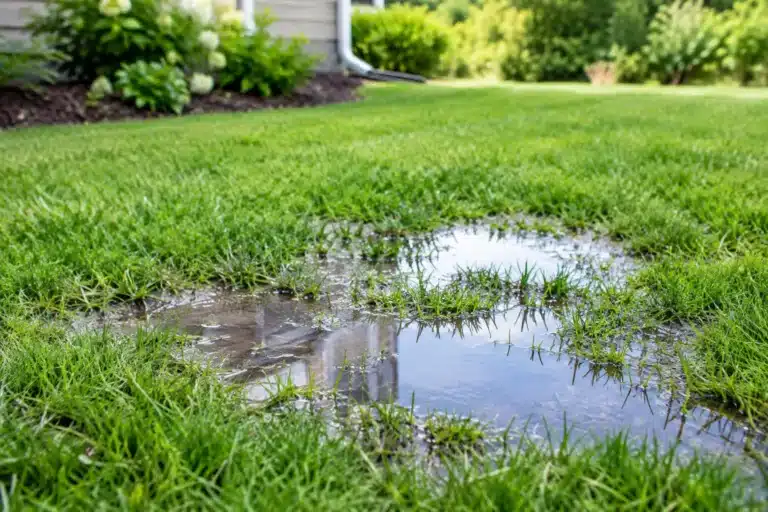

A lawn can look flat and tidy yet still hold water for days after a storm. Often, the problem is soil compaction – dense, pressed-down soil that leaves little room for water, air, or grass roots to move. It is one of the most common reasons homeowners see puddles, thin turf, muddy traffic areas, and garden beds that never seem to thrive.
Compacted soil is not always obvious from the surface. You may add seed, fertilizer, or topsoil and see only short-term improvement because the underlying ground is still too dense. Before investing in new sod, planting, grading, or a backyard renovation, it pays to understand what is happening below the lawn.
What Soil Compaction Does to Your Yard
Healthy soil contains a balance of mineral particles, organic matter, water, and air pockets. Those open spaces matter. They allow rainwater to soak in, roots to spread, and beneficial soil life to do its work.
When soil is compacted, those spaces are squeezed shut. Water cannot infiltrate quickly, so it pools on the surface or runs toward the wrong part of the property. Roots stay shallow and weak because they cannot push through the dense layer below. During hot, dry weather, that same lawn can turn brown quickly because shallow roots cannot reach moisture deeper in the soil.
In the Waterloo Region, the effects can become more noticeable after winter. Freeze-thaw cycles, snowmelt, and spring rain put pressure on an already dense yard. If the lawn has low spots or poor grading as well as compacted soil, water may collect near walkways, patios, foundation areas, or the bottom of a slope. Compaction is not always the only drainage issue, but it can make every other issue worse.
Signs You May Have Soil Compaction
The simplest test is to check how the ground responds after rainfall. If water sits on the lawn long after nearby yards have dried, dense soil may be part of the problem. Another quick check is to push a screwdriver or soil probe into moist ground. If it stops after an inch or two in several areas, the soil may be heavily compacted.
Other warning signs include grass that grows unevenly, bare paths where people or pets walk, moss in persistently damp areas, and turf that feels hard underfoot. Gardens may show stunted plants even when they receive regular water and fertilizer. New sod can also struggle to establish if the soil beneath it was not properly loosened and prepared.
Pay attention to where the problem occurs. A compacted strip beside a driveway has a different cause and solution than an entire backyard that was compressed during construction. That distinction affects the scope of the work and helps avoid paying for a fix that only treats the surface.
Common Causes Around Residential Properties
Foot traffic, children playing, and pets can compact a narrow section of lawn over time. More significant compaction often comes from vehicles, construction equipment, repeated material deliveries, or heavy machinery used during a renovation. Clay-heavy soil is especially prone to becoming dense when it is worked wet.
Newer homes can be particularly challenging. During construction, topsoil is often stripped, stockpiled, and replaced over subsoil that has been driven over repeatedly. The finished yard may look acceptable at first, but poor drainage and weak turf can appear after the first few seasons.
Improper grading can contribute too. Soil that stays wet for long periods is easier to compress under traffic. On the other hand, trying to solve a drainage issue by simply adding a thin layer of topsoil can bury the symptom without restoring the soil structure underneath.
How to Fix Soil Compaction Without Creating New Problems
The right approach depends on the depth of the compaction, the type of soil, the slope of the lot, and what you plan to build or grow there. A lightly compacted established lawn may benefit from core aeration. This process removes small plugs of soil, creating openings for air, moisture, and roots. It works best when the lawn is actively growing and the soil has enough moisture to pull clean plugs.
Aeration is maintenance, not a cure-all. It can improve surface conditions, but it will not correct severe compaction from construction traffic, poor subgrade, or a badly graded yard. If water is pooling because the lawn slopes toward the house, aeration alone will not move that water away.
For moderate lawn issues, aeration followed by overseeding and a light topdressing of quality compost or screened topsoil can help rebuild soil structure over time. The material should be applied in a thin, even layer so it does not smother the existing grass. Repeating this process as part of regular lawn care can make a real difference, especially in high-traffic areas.
More serious cases may require deeper soil preparation. That can involve removing failing sod, loosening the compacted layer, reshaping grades, adding suitable soil, and installing fresh sod once the base is properly prepared. This is also the right time to address drainage routes, low spots, edging elevations, and the transition between lawn and hardscape.
Compaction Near Patios, Driveways, and Retaining Walls
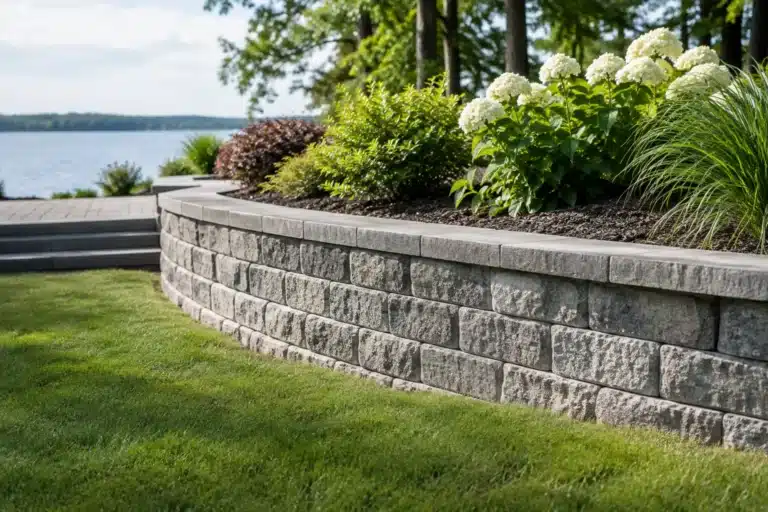
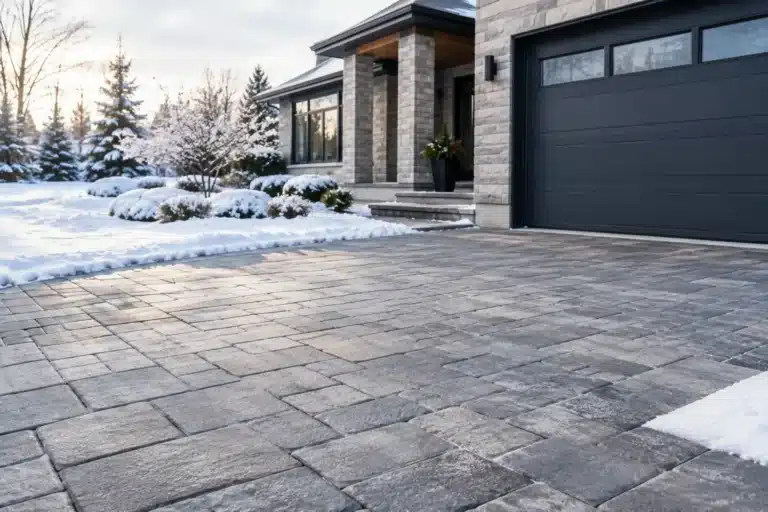
Soil preparation is especially important around hardscape work. A patio, walkway, or retaining wall needs a stable base, but the surrounding lawn and planting areas still need to drain correctly. The goal is not to make every part of the yard equally hard. It is to compact the proper base materials in the correct layers while keeping landscape soil healthy and shaped to direct water safely.
This is where homeowners can run into trouble with do-it-yourself repairs. Adding soil beside a patio can create a slope toward the home. Digging too close to a retaining wall can disturb support or drainage components. Running equipment over wet soil can create more compaction than the project started with.
A planned installation accounts for elevations before materials go in. Patios and walkways should shed water appropriately, downspout outlets need a clear route, and lawn areas should not become accidental collection basins. For properties with slopes, the solution may include grading changes, drainage improvements, or a retaining wall designed to manage both soil pressure and water.
When Professional Soil Preparation Is Worth It
If the issue is limited to a small, worn lawn path, renting or hiring an aerator may be enough. But professional assessment is worth considering when water stands near the foundation, sod repeatedly fails, the yard has visible slope issues, or you are planning a larger landscaping project.
Soil work is most cost-effective when it is coordinated with other improvements. If you are replacing a patio, installing a retaining wall, adding garden beds, or putting in new sod, correcting compaction and grading first protects the investment. Premium stone and fresh turf cannot perform well over a poorly prepared base.
At Right On Landscaping, soil preparation is treated as part of the finished result, not an afterthought hidden beneath new sod or stone. A proper site review looks at drainage patterns, existing grades, access for equipment, and how the yard will be used by your family. That helps create a practical scope of work and a clear estimate before installation begins.
Keep Compaction From Returning
Once the soil has been improved, avoid driving vehicles or storing heavy materials on the lawn. Keep regular foot traffic on defined paths where possible, and consider stepping stones or a walkway through commonly used areas. Avoid working garden beds when the soil is saturated, since wet soil compresses easily and forms hard clumps as it dries.
For lawns, periodic core aeration and organic topdressing can maintain healthier structure. Good drainage also protects the soil. Water that moves away from the home and does not linger in low areas is less likely to create muddy, compacted conditions under normal use.
If your yard feels hard, stays wet, or struggles despite regular care, do not assume the answer is more seed or more fertilizer. Start with the ground beneath it. Well-prepared soil gives grass, gardens, and every outdoor improvement a better chance to last.