
A good landscape design does more than make a yard look finished for a season. In Kitchener, Waterloo, Cambridge, and across the Waterloo Region, it has to manage spring melt, summer rain, freeze-thaw cycles, slopes, foot traffic, and the way your family actually uses the space. A beautiful patio that holds water, a lawn that never levels out, or a retaining wall built without the right base will become an expensive frustration.
The best outdoor projects start with a practical plan. That plan balances curb appeal with drainage, structure, maintenance, budget, and materials that can stand up to Ontario weather. Whether you are rebuilding a front entrance, fixing a muddy backyard, or starting with a bare lot, the right decisions at the beginning make the finished result look better and last longer.
Start Landscape Design With the Site, Not the Wish List
Homeowners often have a clear picture of what they want: a larger patio, cleaner garden beds, a greener lawn, or a driveway with better curb appeal. Those are good goals, but the first step is understanding what the property needs.
Grade is one of the biggest factors. Water should move away from the home and toward a suitable drainage area, not settle beside a foundation, run across a walkway, or pool on a patio. A yard with low spots may need regrading and fresh soil before sod or planting begins. A sloped yard may need a retaining wall, garden terraces, or carefully planned drainage to prevent erosion.
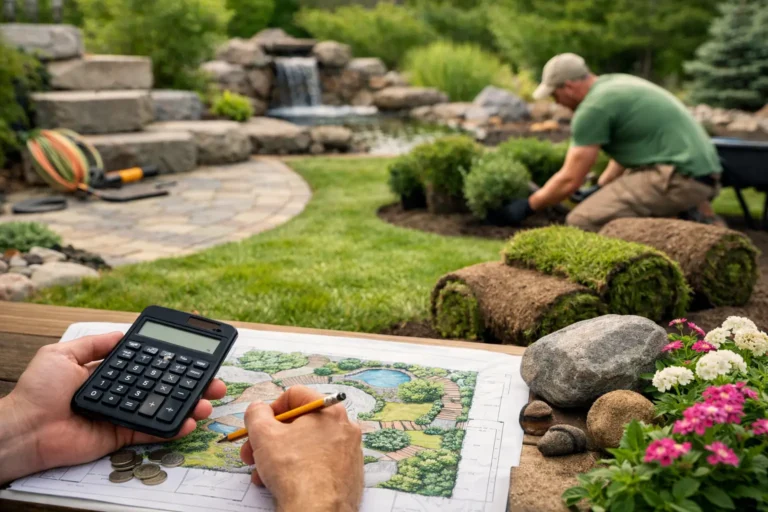
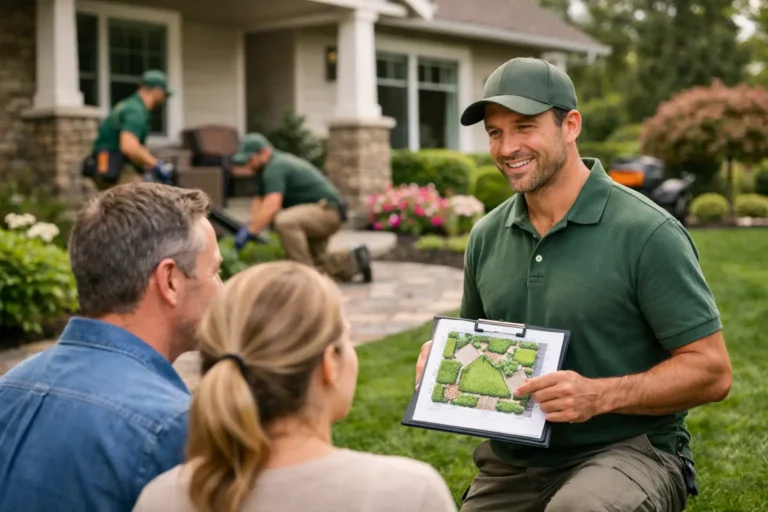
Existing conditions also affect the cost and scope of the work. Tree roots, compacted soil, old concrete, utility locations, narrow access, and the condition of neighboring grades can all change the installation plan. This is why an on-site estimate matters. It gives a contractor the chance to measure, assess drainage, discuss material options, and identify structural concerns before promising a price.
A straightforward plan does not mean every detail needs to be complicated. It means the details that matter are handled before stone, sod, or plants go into the ground.
Build the Yard Around How You Live
A well-designed outdoor space should make daily life easier. For some homeowners, that means a front walkway wide enough for visitors and safe in winter. For others, it means a backyard patio with room for a dining set, grill, and space for kids to play without stepping straight into garden beds.
Think about movement first. Where do people enter the property? How do you carry groceries from the driveway? Where does the dog run after rain? Is there a worn path from the deck to the shed? These patterns show where walkways, steps, gates, and durable surfaces should go.
Then consider the purpose of each area. A front yard usually benefits from clean edges, healthy sod, defined planting beds, and a strong path to the entrance. A backyard may need zones: a seating area close to the house, an open lawn area, a play space, a fire feature area, or a screened garden bed. Not every yard needs every feature. A smaller backyard can feel crowded if it tries to do too much, while a larger lot can feel unfinished without clear spaces and connections.
The most useful designs prioritize the features you will use often. A modest but properly built patio is usually a better investment than a large patio that leaves no room for drainage, lawn, or access.
Hardscaping Needs a Strong Foundation
Interlock patios, driveways, walkways, outdoor stairs, and retaining walls add structure to a property. They can improve curb appeal immediately, but their long-term performance depends on what is below the visible surface.
In this climate, base preparation is not optional. Excavation depth, compacted granular base, edge restraints, proper slope, and drainage all help stonework resist shifting and settling through winter. The exact preparation depends on the application. A pedestrian walkway does not carry the same load as a driveway, and a set of garden steps has different structural needs than a raised patio.
Retaining walls deserve especially careful planning. A wall may hold back a garden bed, create a level seating area, or manage a difficult slope. If it retains substantial soil, it needs the correct base, drainage stone, backfill, and construction method. In some situations, permits or additional engineering may be required. A wall should never be treated as a simple decorative stack of blocks when it is doing structural work.
Material selection matters, too. Premium pavers, wall block, natural stone, and quality polymeric sand can provide a clean, durable finish, but no material will overcome poor installation. The goal is stonework that looks intentional on day one and stays stable after several winters.
Choose Materials for Maintenance as Well as Appearance
There is no single best material for every property. Interlock is a popular choice because individual pavers can be repaired if needed and the layout can suit both traditional and modern homes. Natural stone offers a distinct look but may carry a higher material and installation cost. Concrete can be practical in the right setting, although repairs are often more noticeable if it cracks or settles.
The right choice depends on your budget, the style of your home, intended use, and maintenance expectations. A clear quote should explain what is included in the preparation and finishing work, not just name the surface material.
Softscaping Makes the Structure Feel Like Home
Once grading and hardscaping are in place, softscaping brings warmth, color, and seasonal interest to the property. This includes sod, soil preparation, garden planting, mulch, river rock, and defined bed edges.
New sod can transform a property quickly, but it needs the right foundation. Removing debris, adjusting grade, adding suitable topsoil where needed, and leveling the area help support healthy rooting. Sod also requires consistent watering during establishment. If drainage or soil compaction is ignored, even high-quality sod may struggle.
Garden beds should be designed for the amount of sun they receive and the level of upkeep you want to provide. A planting plan with a mix of shrubs, perennials, and manageable ground cover can look full without demanding constant attention. Mulch helps retain moisture, reduce weeds, and create a finished appearance. River rock can work well in certain drainage areas or low-maintenance beds, but it should be used with purpose. Rock is harder to remove or change later than mulch, and it can become a catch-all for leaves if installed beneath messy trees.
Simple, well-spaced planting often outperforms an overcrowded bed. Plants need room to mature, and homeowners need access to prune, weed, and maintain the space.
Plan for Water Before It Becomes a Problem
Water is one of the main reasons landscaping projects fail. It can wash out soil, undermine pavers, create slippery paths, damage grass, and put unnecessary moisture near a foundation.
A sound drainage plan may include grading, swales, drainage stone, carefully placed downspout outlets, and hardscape surfaces pitched away from the home. The best approach depends on the lot. Directing more water toward a neighbor’s property is not a solution, and covering a low spot with soil without addressing where the water will go usually creates a new problem elsewhere.
Drainage work is not always the most visible part of a project, but it protects every visible part. When a patio drains properly, a lawn dries out more evenly, and a slope holds its soil after heavy rain, the entire yard is easier to enjoy and maintain.
Set a Budget That Protects the Important Work
A landscaping budget should account for the parts of a project that cannot be seen after completion: excavation, base materials, compaction, drainage, soil preparation, and disposal. These are often the places where low quotes cut corners.
That does not mean every project needs to be completed at once. A phased plan can be a smart option. For example, a homeowner may complete grading, a retaining wall, and patio first, then add planting beds and sod afterward. The key is to plan the phases in the right order so finished areas are not damaged by later work.
Ask for a transparent estimate that outlines the scope, materials, site preparation, and expected timeline. Good communication is part of good craftsmanship. You should know what is being installed, why it is being recommended, and how weather or site conditions could affect the schedule.
A Better Yard Starts With a Practical Conversation
The strongest landscape design is not the one with the most features. It is the one that solves the property’s real issues, fits the way your household lives, and is built carefully enough to handle years of Ontario weather.
If your lawn is uneven, your patio is failing, or your yard has potential but no clear plan, start with an on-site assessment. Right On Landscaping can help homeowners turn ideas into durable, custom outdoor spaces with clear guidance, premium materials, and workmanship built to last. A free estimate is a useful first step toward a yard that looks right and works right.