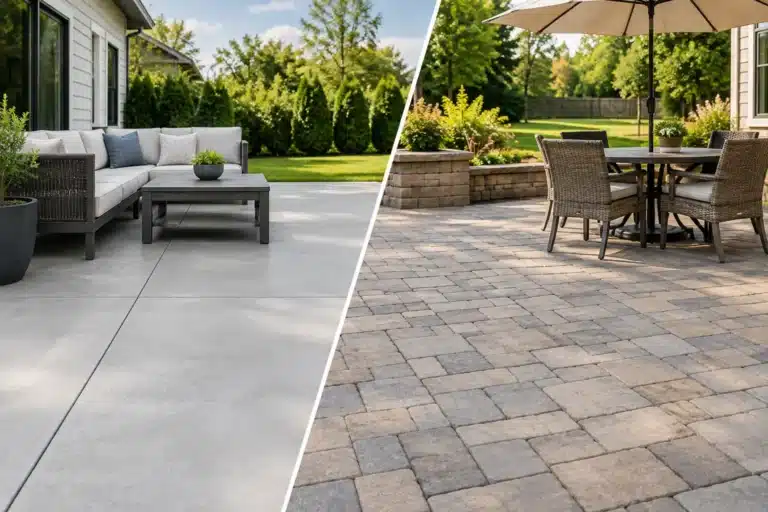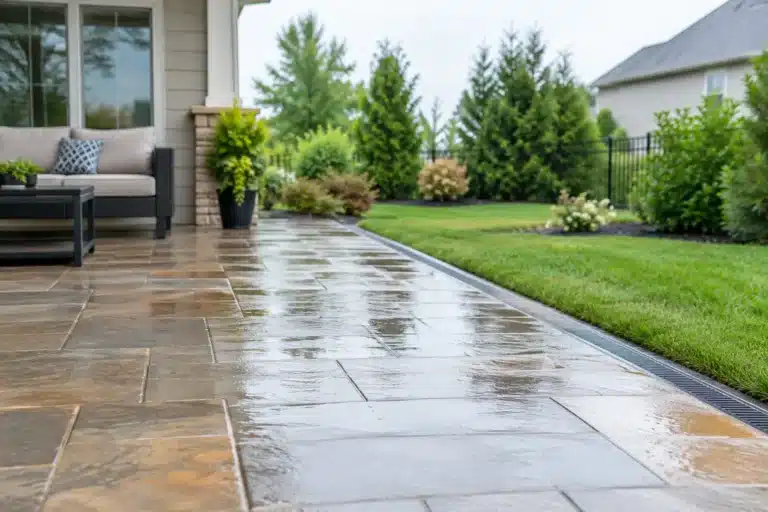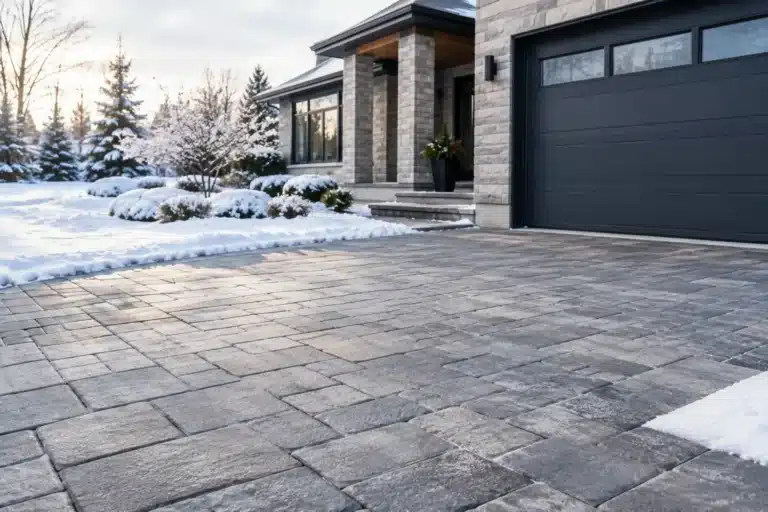

A muddy path beside the garage, a patio that holds water after a storm, or a driveway with worn-out asphalt can make the choice feel urgent. When homeowners compare gravel versus pavers, the right answer is rarely about appearance alone. The surface needs to suit how you use the space, how water moves across the property, and how it will handle Ontario’s freeze-thaw weather.
Gravel can be an excellent, cost-conscious material for the right area. Pavers offer a more finished, structured surface with long-term versatility. Both can perform well, but only when the base preparation, grading, edging, and drainage are handled properly.
Gravel Versus Pavers: The Core Difference
Gravel is loose aggregate installed over a prepared base. It creates a natural, informal look and is commonly used for driveways, side yards, garden paths, utility areas, and drainage-focused spaces. Because water can move through it, gravel is often a practical option where puddling or runoff is a concern.
Pavers are individual concrete or natural stone units installed over a compacted granular base and bedding layer. They can form patios, walkways, driveways, front entries, pool surrounds, and outdoor steps. Their interlocking structure creates a clean, durable surface that can be shaped around curves, borders, planting beds, and existing features.
The visual difference is immediate. Gravel feels relaxed and functional. Pavers create a more permanent outdoor living space. The performance difference becomes clear over time: gravel shifts and needs periodic attention, while pavers require a larger upfront investment but provide a stable, walkable surface when installed correctly.
Cost: Upfront Budget and Long-Term Value
Gravel usually has the lower initial cost. The material is generally less expensive, installation can be faster in straightforward areas, and it does not require the detailed cutting and laying involved with pavers. For a long rural-style driveway, a narrow side passage, or a utility zone where appearance is secondary, that difference can be significant.
However, low initial cost does not mean no future expense. Gravel can migrate into lawn edges and garden beds, develop ruts under vehicle traffic, and thin out over time. Most gravel surfaces need raking, topping up, and edge repairs. A driveway may also need regrading if its base was not built to carry regular vehicle weight.
Pavers cost more because the work beneath the surface matters. A proper installation includes excavation to the required depth, compacted granular base material, correct slope away from the home, edge restraint, bedding sand, and joint sand. Driveways need a deeper, stronger base than pedestrian walkways. Those steps take time, skilled labor, and materials, but they help prevent settling and movement.
For homeowners planning to stay in their home, a paver patio or front walkway can deliver strong value through daily use, curb appeal, and a more finished property. For a practical area with a limited budget, gravel can be the smarter investment. The key is matching the material to the job instead of forcing one solution everywhere.
Drainage and Grading Matter More Than Surface Choice
Neither gravel nor pavers can solve a drainage problem on their own. Water needs a planned route away from the house, garage, and other structures. If a yard slopes toward the foundation, if downspouts discharge into a walkway, or if a low area regularly collects water, the site should be assessed before surface materials are selected.
Gravel is naturally permeable, which makes it useful in areas where water needs to move down through the surface. It can work well around sheds, along side yards, and in landscape zones designed to manage runoff. But water still needs somewhere to go once it reaches the base. Poorly prepared gravel over compacted clay soil can hold moisture and become soft or muddy.
Traditional pavers are not fully permeable, although joints allow some water through. A properly graded paver surface directs water away from buildings and toward a suitable drainage area. In some situations, permeable paver systems may be worth considering. These use wider joints and a specially designed aggregate base to allow water to pass through the surface more effectively.
A contractor should look at the entire site before recommending either material. That includes existing elevations, soil conditions, downspout locations, nearby gardens, retaining walls, and the grade at the house. A beautiful patio that directs water toward the foundation is not a successful installation.
Winter Performance in Waterloo Region
Ontario winters are hard on outdoor surfaces. Moisture enters small gaps, freezes, expands, and then thaws. That cycle can expose shortcuts in excavation, base compaction, and edge support.
Gravel handles freezing conditions reasonably well because it is flexible. It does not crack like poured concrete. The trade-off is that snow removal can be more difficult. A shovel or snowblower set too low can pull gravel into the lawn or leave bare spots. Gravel also tends to get pushed aside by tires, snowplows, and repeated foot traffic during wet weather.
Pavers are also well suited to cold climates when installed on a properly compacted base. Individual units can move slightly with seasonal ground changes, and repairs are more manageable than with a cracked concrete slab. If a section settles years later, the affected pavers can often be lifted, the base corrected, and the surface reinstalled.
Paver joints do need maintenance. Polymeric joint sand may need to be refreshed over time, particularly in high-traffic areas or locations exposed to frequent runoff. De-icing products should also be chosen carefully. Some products can affect concrete pavers or surrounding plant material, while harsh metal shovels can scratch certain surfaces.
Which Surface Works Best for Each Area?
For a patio, pavers are usually the stronger choice. They provide a level surface for furniture, grills, dining areas, and family use. They also create clear edges between lawn, gardens, and outdoor living areas. Gravel patios can look attractive, but chair legs sink, loose stone gets carried indoors, and the surface is less comfortable for frequent entertaining.
For a front walkway, pavers generally offer better safety and curb appeal. A stable, even walking surface is especially valuable in wet or icy conditions. Gravel can work for a secondary garden path, but it is less comfortable for strollers, rolling bins, guests in dress shoes, or anyone with mobility concerns.
For a driveway, either option can work. Gravel is often practical for long driveways, larger rural properties, or homeowners who want a lower-cost solution. Pavers are a premium option for shorter driveways, front entries, and properties where appearance matters as much as vehicle access. A paver driveway needs a substantial base and properly installed edge restraints to withstand vehicle loads.
For side yards and drainage areas, gravel often earns its place. It can reduce mud, provide access for maintenance, and complement river rock or planted beds. The right edging keeps it contained and helps maintain clean lines.
Maintenance Expectations
Gravel maintenance is simple but ongoing. Expect to rake displaced stone, remove weeds, keep edges tidy, and add material periodically. Installing a quality geotextile fabric and solid edging during construction helps reduce mixing with the soil and limits migration, but it does not eliminate maintenance entirely.
Pavers require less frequent surface maintenance, though they are not maintenance-free. Sweeping, occasional washing, weed control at joints, and periodic joint-sand renewal keep the surface looking sharp. Oil stains on a driveway should be treated quickly. If a paver becomes stained or damaged, replacing a single unit is usually easier than repairing a large section of concrete.
The best-maintained surface is one that was built correctly from the beginning. Skipping excavation depth, using insufficient base material, or failing to compact in lifts may save money at the start, but it often leads to uneven surfaces, drainage issues, and repairs later.
Make the Choice Around How You Live
Choose gravel when you need an affordable, permeable, informal surface for a lower-traffic area, long driveway, side yard, or landscape feature. Choose pavers when you want a stable, polished surface for a patio, walkway, front entry, or high-visibility driveway.
Many properties benefit from both. A paver patio can create the main gathering space, while gravel provides practical access along the side of the home or around a shed. Combining materials can control costs without compromising the areas where comfort, safety, and curb appeal matter most.
Before committing, walk the property after rain and think about how the space works on a busy weekend, during snow removal, and five years from now. A free on-site estimate from Right On Landscaping can help turn those observations into a practical plan built for your yard, budget, and local conditions.